
Email compliance is critical for businesses to avoid hefty fines and maintain customer trust. This guide breaks down the key rules for three major regulations: CAN-SPAM (U.S.), CASL (Canada), and GDPR (EU). Each has unique requirements, but aligning with the strictest standards ensures global compliance. Here’s what you need to know:
- CAN-SPAM: U.S. law allowing marketing emails until recipients opt out. Requires honest subject lines, clear sender info, and a simple unsubscribe option. Fines: up to $53,088 per email.
- CASL: Canada’s stricter opt-in law. Businesses must secure explicit consent before sending emails. Violations can cost up to CAD $10 million.
- GDPR: EU regulation with the highest standards. Requires unambiguous consent, detailed data protection measures, and strict penalties – up to €20 million or 4% of global revenue.
For businesses operating across borders, following GDPR’s stricter requirements simplifies compliance. Key steps include using double opt-in, maintaining accurate records, and ensuring email authentication (SPF, DKIM, DMARC). Non-compliance risks include fines, reputational damage, and reduced email deliverability.
Quick Comparison:
| Regulation | Consent Type | Fines (Max) | Key Focus |
|---|---|---|---|
| CAN-SPAM | Opt-out | $53,088 per email | Email transparency |
| CASL | Explicit opt-in | CAD $10M (orgs) | Anti-spam protection |
| GDPR | Unambiguous opt-in | €20M or 4% revenue | Data privacy |
Adopting the strictest standards ensures compliance across regions while building trust with your audience.
GDPR, CASL, CAN SPAM, Oh My!
Understanding the CAN-SPAM Act
The CAN-SPAM Act (Controlling the Assault of Non-Solicited Pornography and Marketing Act) is the federal law that regulates commercial email communications sent to recipients in the U.S. Its primary goal is to shield consumers from misleading or deceptive emails. This law applies to both B2B and B2C communications, meaning any business sending marketing emails to U.S. audiences must comply.
The Act ensures that consumers have the right to opt out of unwanted emails and applies to any marketing email sent to U.S. recipients, regardless of where the sender is located. Even international businesses targeting American customers are required to follow these rules. The Federal Trade Commission (FTC) enforces the law, investigating complaints and prosecuting businesses that fail to comply. This legal framework is essential for understanding the rules and the serious consequences of non-compliance.
CAN-SPAM Requirements
The Act outlines seven key requirements that every commercial email must meet:
- Accurate Sender Information: The "From" and "Reply-To" fields, domain names, and email addresses must clearly and accurately identify the sender.
- Honest Subject Lines: Subject lines must not mislead recipients and should accurately reflect the email’s content.
- Advertisement Disclosure: Commercial emails must clearly state that they are advertisements, with a visible and obvious disclosure.
- Valid Physical Address: Every email must include a current, valid postal address for the sender.
- Clear Unsubscribe Option: Emails must provide a visible and easy-to-use unsubscribe link, allowing recipients to opt out without unnecessary steps.
- Timely Opt-Out Processing: Businesses must process unsubscribe requests within 10 business days[1]. Once a recipient opts out, the sender must stop promotional emails, though essential transactional messages can still be sent.
- Third-Party Monitoring: Companies are responsible for ensuring that any third-party vendors they work with comply with CAN-SPAM requirements.
The Act also prohibits harmful practices like email harvesting, misleading routing information, and selling or sharing email addresses of individuals who have opted out. Additionally, spam filters cannot block legitimate unsubscribe requests.
Enforcement and Penalties
The FTC has ramped up enforcement of CAN-SPAM, with penalties designed to discourage violations. Non-compliance can result in hefty fines. For instance, sending a campaign to 1,000 email addresses could lead to penalties exceeding $53 million.
Using advanced analytics, the FTC identifies violations, and while massive fines are uncommon, even smaller penalties can add up quickly. Consumers are encouraged to report violations, and investigations may also be initiated by state attorneys general or Internet Service Providers.
Businesses relying on third-party email services face increasing scrutiny, especially as courts and regulators focus more on privacy concerns. With state laws like California’s CPRA and Virginia’s VCDPA intersecting with federal regulations, the risk of non-compliance is growing.
Failing to comply with CAN-SPAM isn’t just about fines – it can also damage a company’s reputation, hurt email deliverability, and erode customer trust. These risks highlight why strict adherence is crucial before diving into other regulatory frameworks.
CASL: Canada’s Anti-Spam Legislation
Canada’s Anti-Spam Legislation (CASL) takes a stricter stance on email compliance compared to the CAN-SPAM Act. While CAN-SPAM allows businesses to send emails until recipients opt out, CASL requires businesses to obtain explicit permission before sending any commercial electronic messages. This opt-in approach makes CASL one of the toughest anti-spam laws globally. But CASL’s influence isn’t limited to email – it also governs a range of digital communication platforms.
CASL applies to all commercial electronic messages, including emails, SMS, instant messages, and social media communications, sent to recipients in Canada – regardless of where the sender is located. Its primary goal is to shield Canadians from unwanted digital messages while fostering trust in electronic commerce. Unlike CAN-SPAM’s opt-out model, CASL shifts the responsibility to businesses, requiring them to prove they obtained consent before sending messages. For companies targeting Canadian audiences, this means rethinking how they gather and document consent.
Types of Consent Under CASL
CASL defines two types of consent: express consent and implied consent. Each has specific rules and limitations, making it essential to understand their differences.
- Express Consent: This occurs when recipients actively agree to receive messages. Examples include checking a box during account registration, signing up for a newsletter, or giving verbal consent over the phone. Pre-checked boxes or unclear consent language do not meet the standard. Businesses must document when, how, and by whom the consent was granted. For instance, if someone subscribes to your newsletter, you should record the date, time, and method of their opt-in, along with details of the process.
- Implied Consent: This applies in situations where a business relationship already exists. Examples include ongoing contracts, recent purchases, or when someone publicly shares their email address without restrictions on its use. However, implied consent is temporary and requires careful tracking of the relationship and its timeline. For instance, if a customer buys your product in January 2024, you can send related marketing emails for up to two years, provided you document the purchase and monitor when the consent period ends.
In both cases, businesses must clearly identify themselves when obtaining consent and specify the types of messages recipients can expect. Vague terms like "updates" or "promotions" aren’t sufficient.
Penalties and Scope
CASL enforcement is no joke. Organizations can face fines of up to CAD $10 million per violation, while individuals may be fined up to CAD $1 million. These penalties far exceed those under CAN-SPAM. The Canadian Radio-television and Telecommunications Commission (CRTC) actively enforces CASL. For example, in 2015, Compu-Finder was fined CAD $1.1 million for sending unsolicited emails without proper consent[3].
CASL’s scope goes beyond email marketing. It covers any electronic message with a commercial purpose, including direct messages on social media, SMS campaigns, and even some mobile app notifications. Additionally, the law prohibits installing software programs without the user’s consent, adding another layer of compliance for software vendors and companies offering downloadable content.
A 2024 industry survey revealed that 68% of Canadian businesses updated their email marketing practices to comply with CASL, and 42% adopted double opt-in procedures to meet its requirements[3]. These numbers highlight how significantly CASL has influenced business operations in Canada.
Enforcement is a collaborative effort involving the CRTC, the Competition Bureau, and the Office of the Privacy Commissioner of Canada. Together, they work to identify and prosecute organizations that fail to comply. This strict enforcement underscores the importance of aligning compliance strategies with CASL’s requirements.
For businesses relying on email marketing, compliance tools like MailMonitor can be a game changer. Features such as inbox placement testing, reputation monitoring, and email verification can help ensure your messages reach their audience without running afoul of spam filters or CASL regulations.
GDPR: General Data Protection Regulation
The General Data Protection Regulation (GDPR) has transformed the way businesses handle personal data. Unlike CAN-SPAM, which focuses on commercial email, or CASL, which targets spam, GDPR is a sweeping privacy law that applies to all personal data processing activities. Since May 25, 2018, it has dictated how organizations manage data belonging to EU citizens.
One of GDPR’s most striking features is its global reach. For example, a company based in New York that emails subscribers in Germany must comply with GDPR. The regulation’s main aim is to give individuals more control over their personal data while standardizing privacy laws across the European Union. For email marketers, this means securing clear and explicit user consent.
Under GDPR, businesses must obtain opt-in consent for marketing emails, a sharp contrast to CAN-SPAM’s opt-out approach. The stakes are high – Amazon, for instance, faced a €746 million fine in 2021 for GDPR violations. Fines can reach up to €20 million or 4% of a company’s global revenue, which makes non-compliance a serious risk for large organizations.
GDPR Principles and Rights
GDPR is built on seven core principles that guide all data processing activities. For email marketers, these principles are key to creating campaigns that adhere to the law.
The principle of lawfulness, fairness, and transparency requires businesses to handle data legally, use it fairly, and clearly explain how they process personal information. For instance, privacy notices must spell out exactly what data is collected and how it will be used. Vague statements like "we may use your information for marketing purposes" won’t cut it.
Purpose limitation means you can only collect data for specific, stated purposes. If you gather email addresses for a newsletter, you can’t later use those addresses for product promotions without obtaining separate consent. Similarly, data minimization obligates businesses to collect only the data they truly need. For example, asking for a birthdate when you only need an email address for a newsletter would violate this principle.
Other principles include maintaining data accuracy, keeping data only as long as necessary, and ensuring integrity and confidentiality by protecting information with robust security measures. The accountability principle requires businesses to document and demonstrate compliance with all these rules.
For email marketing, consent is the most relevant lawful basis for processing personal data. Consent must be freely given, specific, informed, and unambiguous. This means no pre-checked boxes or vague terms.
GDPR also grants individuals eight key rights over their personal data. These include the right to be informed, which ensures clear communication about data collection and use, and the right of access, which lets individuals request copies of their data. The right to rectification allows people to correct inaccuracies, while the right to erasure provides a way to have their data deleted under certain conditions.
Additional rights include the right to restrict processing, which limits how data is used, and the right to data portability, which allows individuals to transfer their data to another service. For email marketers, the right to object is especially important, as it lets individuals stop direct marketing activities immediately. Companies must respond to these requests within one month, so having efficient systems in place is essential.
Compliance Requirements
Complying with GDPR means building privacy protections into every step of your email marketing process. The concept of privacy by design and by default requires systems to automatically prioritize data protection. For example, your email marketing tools should collect only the necessary data and default to the highest privacy settings.
Organizations must also keep thorough records of processing activities, detailing what data is collected, why, how long it’s retained, and who has access. For email marketers, this includes maintaining detailed consent records with timestamps, IP addresses, and copies of consent forms.
For high-risk data processing, Data Protection Impact Assessments (DPIAs) are mandatory. While basic email marketing might not require a DPIA, activities like automated decision-making or profiling typically do.
GDPR also imposes strict breach notification rules. Certain data breaches must be reported to supervisory authorities within 72 hours, and affected individuals must be notified if their rights are at risk. This means marketers need clear procedures for managing incidents and knowing exactly where subscriber data is stored.
Some organizations must appoint a Data Protection Officer (DPO) to oversee compliance, especially if they handle large-scale monitoring or sensitive data.
Key steps for compliance include using double opt-in processes, maintaining clear and transparent privacy notices, and making it easy for users to unsubscribe. Tools like MailMonitor can help by verifying subscriber lists and ensuring emails reach engaged recipients instead of spam folders.
Since GDPR took effect, 68% of organizations have updated their data processing practices. Many have adopted stricter consent mechanisms even for non-EU communications to simplify their compliance efforts[6].
sbb-itb-eece389
Comparing CAN-SPAM, CASL, and GDPR
For marketers working across borders, aligning with the strictest email regulation is often the easiest way to ensure compliance. To do this effectively, it’s critical to understand the key differences between three major frameworks: CAN-SPAM in the U.S., CASL in Canada, and GDPR in Europe. Each one has its own rules for consent, geographic scope, and enforcement.
In the U.S., CAN-SPAM operates on an opt-out model, meaning businesses can send emails until recipients choose to unsubscribe. Canada’s CASL requires explicit opt-in consent, while Europe’s GDPR goes a step further, demanding unambiguous consent before any communication begins. These contrasting approaches reflect different philosophies around privacy and business outreach.
Geographic Challenges
Geography complicates compliance. For instance, a San Francisco-based startup selling to customers in North America and Europe must simultaneously adhere to all three regulations. It’s not just where the company is based – it’s about where the recipients live. This principle was highlighted when Verkada faced a $2.9 million fine in August 2024 for violating CAN-SPAM rules, emphasizing how seriously the U.S. enforces compliance [5].
Comparison Table of Key Differences
| Aspect | CAN-SPAM (USA) | CASL (Canada) | GDPR (EU) |
|---|---|---|---|
| Geographic Scope | United States recipients | Canadian recipients | EU residents globally |
| Consent Mechanism | Opt-out (implied consent) | Opt-in (explicit consent) | Unambiguous consent |
| Maximum Penalties | $53,088 per email | CAD $10M (individuals), CAD $50M (organizations) | €20M or 4% global revenue |
| Enforcement Body | FTC | CRTC | National data protection authorities |
| Primary Focus | Commercial email transparency | Anti-spam protection | Comprehensive data privacy |
| Documenting Consent | Not required | Recommended | Mandatory with detailed records |
| Right to Withdraw | Unsubscribe mechanism | Unsubscribe mechanism | Right to object plus erasure |
| Data Retention Rules | No specific limits | No specific limits | Limited to necessary period |
Different Approaches to Consent
Each regulation’s consent requirements reflect distinct priorities.
- CAN-SPAM assumes that businesses and consumers both benefit from initial contact, as long as recipients can easily opt out of future messages.
- CASL requires businesses to secure explicit permission before sending promotional emails. However, certain business relationships – like a recent purchase – allow for related emails without explicit consent for up to two years.
- GDPR takes the strictest stance, demanding clear and informed consent. Pre-checked boxes are not allowed, and consent requests must be presented separately from other terms and conditions. This framework views personal data as belonging to the individual, not the business.
Enforcement and Financial Risks
Enforcement strategies differ across regions. The FTC uses AI tools to track CAN-SPAM violations, often targeting deceptive practices and affiliate networks [1]. CASL, enforced by the CRTC, focuses on ensuring proper documentation of consent, penalizing both senders and enablers of violations. For GDPR, enforcement is handled by national data protection authorities, with countries like Ireland closely monitoring large tech companies, while others focus on local businesses.
The financial risks are just as varied. CAN-SPAM fines can add up quickly for mass emailers, while GDPR’s revenue-based penalties can threaten a company’s entire operation. For example, Google’s €50 million GDPR fine sent a strong message about the seriousness of compliance [4].
For email marketers, the takeaway is clear: adopting the strictest consent and documentation standards across all communications is the safest way to navigate these regulations and minimize legal exposure.
Best Practices for Multi-Regulation Compliance
Navigating email compliance across multiple jurisdictions might seem daunting, but it’s entirely manageable with the right strategies. A smart approach is to use the strictest regulations as your baseline. This simplifies compliance management and helps ensure your campaigns stay within legal boundaries.
Universal Compliance Strategies
Start by implementing double opt-in at every collection point. This ensures you have explicit consent while creating a verifiable record of when and how consent was given, including the date, time, method, and IP address. This method satisfies GDPR’s need for explicit consent and CASL’s express consent requirements, while also making compliance tracking easier across different regions.
Your sender details must clearly represent your organization. This includes ensuring that your "From" and "Reply-To" fields, email addresses, and domain names unmistakably identify your business. Additionally, every email footer should include your full physical postal address. This step is mandatory under CAN-SPAM and aligns with GDPR’s transparency principles.
Make sure every email includes a simple, one-click unsubscribe link. The opt-out process should be straightforward – no logging in or extra steps required. Requests to unsubscribe should be processed immediately, aligning with GDPR and CASL’s stricter standards.
The FTC has started using artificial intelligence and machine learning to detect potential CAN-SPAM violations at scale. These tools analyze elements like subject lines, sender domains, and complaint patterns [1]. This highlights the importance of maintaining accurate suppression lists to prevent emails from reaching recipients who’ve opted out. To improve list hygiene and tracking, create separate suppression categories for reasons like unsubscribes, spam complaints, and hard bounces.
Once these foundational strategies are in place, technical measures can further strengthen compliance efforts.
Technical Implementation Tips
From a technical perspective, email authentication and list hygiene are essential for a strong compliance framework. Authentication protocols not only help with compliance but also improve deliverability. As of 2024, major providers like Gmail and Yahoo require SPF, DKIM, and DMARC for large senders [1].
- SPF (Sender Policy Framework): Authorizes specific IP addresses to send emails on behalf of your domain.
- DKIM (DomainKeys Identified Mail): Digitally signs messages to prevent tampering.
- DMARC (Domain-based Message Authentication, Reporting & Conformance): Instructs Internet Service Providers on how to handle emails that fail SPF or DKIM checks.
These protocols work together to boost your sender reputation and ensure your emails land in inboxes rather than spam folders. Proper setup usually involves your IT team or email service provider updating DNS records and configuring email servers.
Maintaining clean email lists is equally important. Regularly remove hard bounces, monitor complaint rates, and run re-engagement campaigns to keep your list in good shape. Avoid using purchased or harvested email lists, as these violate both CAN-SPAM and GDPR consent rules. Spam complaint rates higher than 0.1% can indicate deliverability issues and possible compliance risks. By auditing your lists periodically, you can confirm that all active subscribers have proper consent documentation.
Pay close attention to third-party vendors if they send emails on your behalf. Enforcement agencies are cracking down on companies that try to shift blame to partners for non-compliant messages. Make sure your vendor agreements clearly require adherence to CAN-SPAM, CASL, and GDPR. Vendors should maintain consent records and honor opt-out requests promptly.
The financial risks of non-compliance are steep. As of March 2025, CAN-SPAM violations can result in fines of up to $53,088 per email [1]. Sending a single campaign to 1,000 non-compliant addresses could lead to penalties exceeding $53 million. Even if a partner is at fault, your organization could still be held liable.
To stay ahead, consider tools like MailMonitor to streamline compliance efforts. These platforms provide insights into deliverability and reputation management, helping you catch potential issues early. Regular audits with such tools ensure your emails reach inboxes while staying compliant with regulations worldwide.
Using Tools for Compliance Monitoring
Managing email compliance across various regulations can feel overwhelming, but the right tools make it much easier. These tools integrate smoothly into existing compliance workflows and provide real-time insights to catch potential problems early. For instance, the FTC’s growing use of AI to detect CAN-SPAM violations highlights the importance of staying proactive with monitoring efforts [1]. This is where MailMonitor’s tools come into play, offering solutions to uphold strict compliance standards.
MailMonitor Features for Compliance
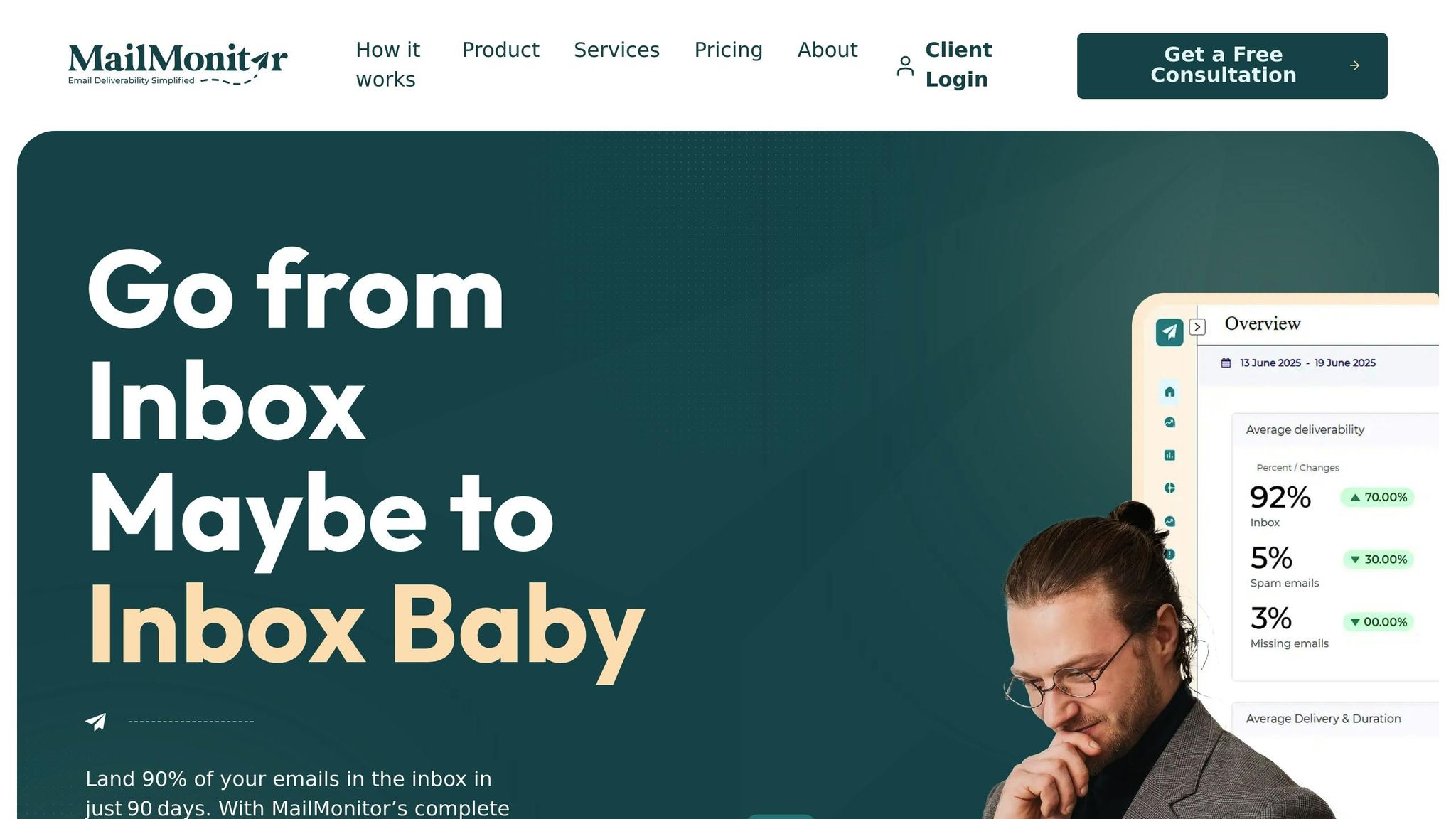
MailMonitor is packed with features designed to keep your email campaigns compliant while ensuring they reach your audience effectively. One standout feature is its inbox placement testing, which checks how your emails perform across more than 400 real inboxes. This helps you see exactly where your messages land, ensuring they hit the mark [7].
The platform also provides real-time reputation monitoring to keep tabs on your sender reputation. Early alerts about potential issues – like high complaint rates or authentication failures – allow you to address problems before they escalate. Additionally, MailMonitor includes email verification tools that help you maintain clean, engaged subscriber lists. By removing invalid or inactive addresses, you can reduce bounce rates and avoid sending emails to unresponsive recipients.
Another key feature is support for DMARC authentication, which helps meet the email protocol requirements of major providers. MailMonitor also offers infrastructure and ISP monitoring to track how email providers handle your messages. Custom alerts notify you immediately if deliverability metrics drop or if certain ISPs start filtering your emails more aggressively.
"MailMonitor helps us identify and fix our spam issues. It’s like having a deliverability expert on our team. The weekly check-in calls allow us to take feedback, implement it and then follow up the next week with additional items to clarify or get help with. This cadence helps our team get better email results."
– Dan Westenskow, CEO, Fusion HCS
Maintaining Compliance with Regular Audits
While powerful features are critical, regular audits are just as important for staying compliant. These audits help you stay ahead of regulatory changes and maintain strong sending practices. With MailMonitor’s deliverability analytics, you can conduct detailed reviews of your email health, spotting risks like authentication failures, high bounce rates, or declining engagement patterns before they cause major issues [7].
MailMonitor also offers managed services for an expert-level review of your email setup, sender reputation, and overall mailing practices. This guidance can be invaluable for navigating complex compliance challenges and staying updated on regulatory changes. If your emails end up on a blocklist, MailMonitor’s blocklist removal service can quickly address the issue, minimizing its impact on your deliverability and compliance.
To keep your subscriber lists in top shape, MailMonitor includes features for list optimization. It identifies inactive contacts and suggests strategies like re-engagement campaigns or list cleaning to prevent compliance problems caused by poor list hygiene.
With a 90-day guarantee of achieving 90% inbox placement and a history of successfully delivering over 30 billion emails, MailMonitor allows businesses to focus on their marketing goals while staying confident in their compliance efforts [7].
"MailMonitor’s software is easy enough to understand for a beginner with little knowledge of email placement. But what sets them apart is their hands-on support to maximize our deliverability. The team is always friendly and responsive, even with challenging clients like us!"
– Nathan Merryfield, Director of Marketing, hubXchange
Regular audits, paired with these tools, ensure you stay ahead in a constantly evolving regulatory environment. As state-level privacy laws like California’s CPRA increasingly overlap with federal email compliance rules, comprehensive monitoring becomes even more crucial for maintaining compliance on all fronts.
Conclusion
Email compliance is more than just a box to check – it’s the backbone of a trustworthy email program that drives real results. By adhering to CAN-SPAM, CASL, and GDPR, you not only shield your business from hefty fines but also lay the groundwork for email campaigns that genuinely connect with your audience.
The risks of ignoring compliance are steep. Regulators actively pursue violations, and the financial penalties can be devastating[2]. But avoiding fines is just one piece of the puzzle. Compliance has a direct impact on your email deliverability and sender reputation. When you use proper authentication methods, honor opt-out requests without delay, and communicate transparently, your emails are far less likely to be flagged as spam[1]. With spam filters becoming more sophisticated, following these rules is critical to ensuring your messages actually reach the inbox.
Compliance isn’t just about technicalities or avoiding penalties – it’s also about building trust. Clear subject lines, easy-to-use opt-out options, and respect for privacy show your customers that their experience matters. This trust leads to stronger engagement, better conversion rates, and relationships that last[2].
The regulatory environment is constantly shifting. Tools like AI are now being used to detect violations, and state laws, such as California’s CPRA, are adding new layers of responsibility for businesses[1]. Regular audits and ongoing monitoring are no longer optional – they’re essential. Companies that prioritize compliance by maintaining clean subscriber lists and respecting recipient preferences consistently outperform those that take shortcuts. With the right processes and tools in place, compliance isn’t a hurdle; it’s a natural part of running a successful and effective email marketing strategy.
FAQs
What’s the best way for businesses to stay compliant with email regulations like CAN-SPAM, CASL, and GDPR?
To comply with email regulations like CAN-SPAM, CASL, and GDPR, businesses need to prioritize transparency, secure proper consent, and follow strict data protection standards. Regularly checking email deliverability is also crucial to ensure your messages land in the right inboxes without breaking any rules.
Using tools such as inbox placement testing, email verification, and reputation monitoring can make the compliance process smoother. These proactive measures not only help you avoid legal pitfalls but also enhance email performance and build trust with your audience.
How can I properly obtain and document consent to comply with email regulations?
To stay within the boundaries of email regulations like CAN-SPAM, CASL, and GDPR, it’s crucial to get clear, explicit consent from your audience before sending them emails. One effective way to achieve this is by using opt-in forms where users actively confirm they want to receive your communications.
Keep thorough records of this consent, including details like timestamps, IP addresses, and the exact wording of the opt-in agreement. These records can serve as proof of compliance if your practices are ever questioned.
Also, make sure every email you send includes an easy way for recipients to unsubscribe or update their preferences whenever they wish. Not only does this fulfill legal requirements, but it also helps establish trust and credibility with your audience.
What are the risks of not following email compliance laws, and how can businesses avoid them?
Failing to follow email regulations such as CAN-SPAM, CASL, or GDPR can have serious repercussions. Your emails might be marked as spam, customer engagement could drop, and you could even face legal penalties. On top of that, critical emails – like password resets or order confirmations – might not reach your customers, damaging their trust and your brand’s reputation.
To avoid these pitfalls, businesses need to make compliance a top priority. Regularly monitor email deliverability and ensure your messages align with regulatory requirements. Using tools to test inbox placement and enhance email performance can help guarantee your emails reach the right people every time.

