

If you think outsourcing email marketing means you’re off the hook legally, think again. Under the CAN-SPAM Act, your business is responsible for compliance – even when using third-party services or affiliates. Non-compliance can lead to fines of up to $53,088 per email, damage to your brand’s reputation, and reduced email deliverability.
Key takeaways:
- Your business is liable for emails promoting your products, even if sent by partners.
- Violations include misleading subject lines, missing unsubscribe options, or inaccurate sender details.
- Shared campaigns or affiliate marketing increase risk as all parties can face penalties.
- Protect yourself by auditing partners, drafting clear contracts, and using compliance tools like MailMonitor.
Ignoring these rules can cost millions and harm your business long-term. Stay compliant to avoid penalties and safeguard your email marketing efforts.
6 Legal Requirements You NEED to Comply With to Send Marketing Emails | CAN-SPAM Act Explained!
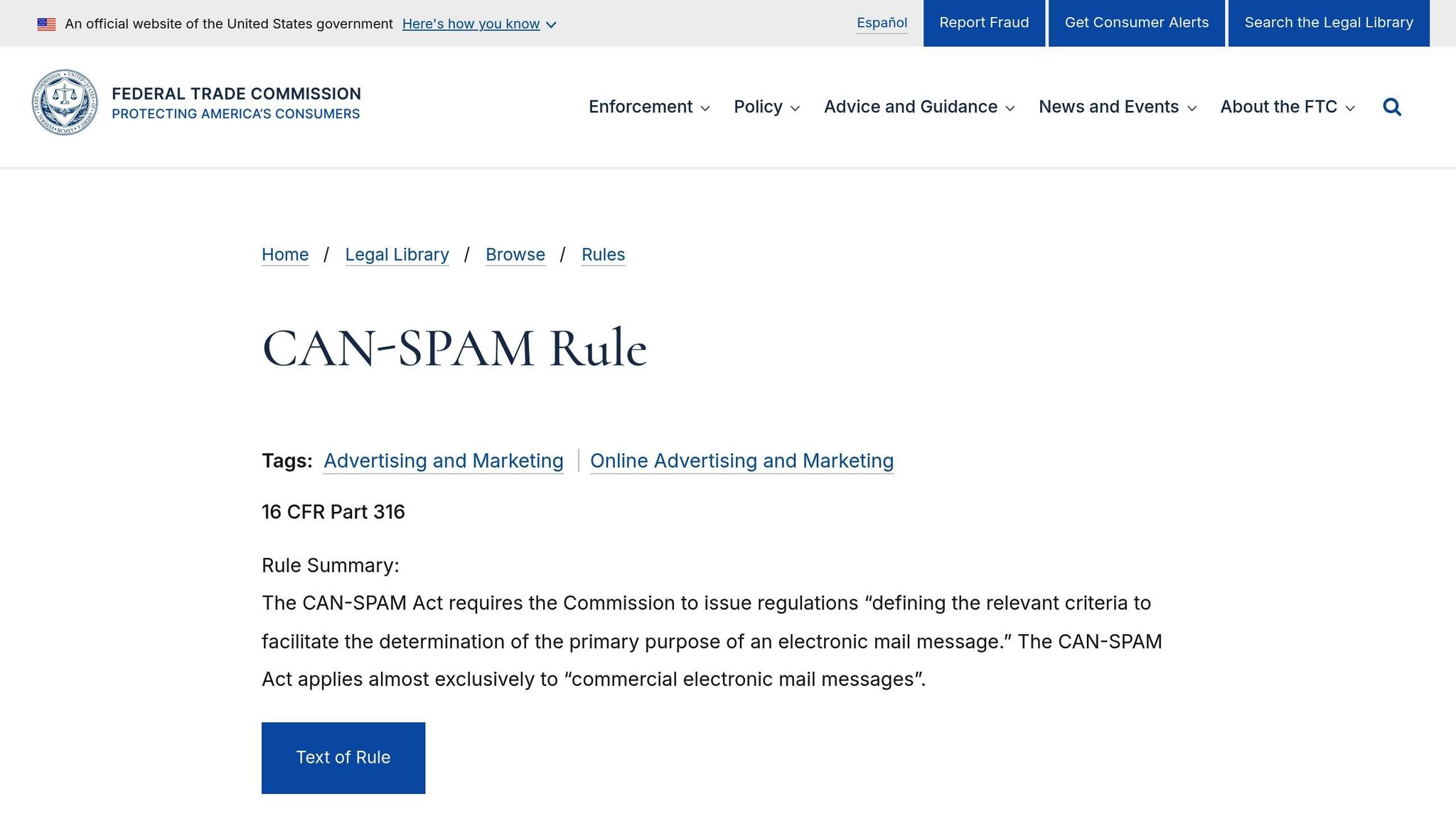
CAN-SPAM Act: Legal Requirements for Email Senders
The CAN-SPAM Act lays out clear rules for commercial email marketing, and these rules apply even when you work with third-party services. If you hire an email marketing company or collaborate with affiliate partners, both your business and the service provider can be held accountable for any violations. Outsourcing compliance doesn’t absolve your responsibility.
Let’s break down the key roles defined under CAN-SPAM to understand who’s liable in different scenarios.
Legal Definitions: Sender, Initiator, and Designated Sender
The CAN-SPAM Act uses specific terms to clarify responsibilities, especially when multiple parties are involved in an email campaign.
- A "sender" is the entity whose products or services are being promoted in the email. Even if a third-party service sends the email, your company is considered the sender if your products are featured.
- An "initiator" is the person or business that starts the email process. This could be your marketing team, an affiliate, or even the email service provider acting on your behalf. The initiator must ensure the email contains accurate routing information and a truthful subject line.
- The "designated sender" role comes into play when multiple businesses are promoted in a single email. One company can assume responsibility as the designated sender, but only if it’s clearly identified in the "from" line and meets all legal obligations of the initiator.
If the designated sender fails to comply, all businesses mentioned in the email become liable. This shared liability means every company promoted in the message could face enforcement action.
The law also covers referral programs. If your business offers rewards like discounts, cash, or coupons for forwarding emails or generating referrals, you may be classified as a sender or initiator. This makes you responsible for ensuring those referrals comply with CAN-SPAM standards.
CAN-SPAM Requirements for Commercial Email
Every commercial email must meet specific guidelines, whether sent directly by your business or through a third-party service. The law focuses on what recipients see in their inboxes, not on your internal arrangements.
Here’s what you need to follow:
- Accurate subject lines and sender details: The subject line and "from" information must reflect the email’s actual content and origin. Misleading sender names or addresses can result in penalties for both your business and the service provider.
- Physical postal address: Every email must include a valid physical address. A P.O. Box is acceptable only if it’s officially registered with the postal service. Many businesses assume the third-party provider’s address is sufficient, but if your business is being promoted, your address should typically appear.
- Unsubscribe options: Emails must include a clear and functional unsubscribe mechanism. Recipients should be able to opt out easily, and you’re required to honor these requests within 10 business days. If you’re using a third-party service, ensure their unsubscribe system works properly and that opt-outs are processed promptly.
- Transparency about commercial intent: While you don’t need to label your email as an "ADVERTISEMENT", its commercial purpose should be obvious to the recipient.
- Accurate routing information: The technical details of the email’s journey – such as headers and transmission paths – must be truthful and not misleading. These details are mostly invisible to recipients but are crucial for email servers.
These rules form a detailed compliance framework for all commercial emails sent in the United States. When working with third-party services, you and your partners share the responsibility for meeting these standards. This makes it critical to choose partners who understand and follow CAN-SPAM regulations.
When Liability Issues Occur in Third-Party Email Marketing
Liability concerns often arise in affiliate, referral, and multi-party email campaigns, where all parties involved share legal accountability. Under the CAN-SPAM Act, every participant can be held responsible, no matter who actually sends the email. This means your business could face penalties even if a third-party partner violates the rules without your knowledge. Let’s take a closer look at how these challenges specifically affect affiliate and referral campaigns.
Liability in Affiliate and Referral Email Campaigns
Affiliate marketing poses unique liability risks, as both your business and your affiliates can be held accountable for any violations of the CAN-SPAM Act during their promotional efforts.
The law considers your business the "sender" because your products or services are being promoted, even if affiliates handle all email-related tasks. This makes you liable for issues like misleading subject lines, missing unsubscribe options, or the use of purchased email lists without consent.
Referral programs add another layer of complexity. When you offer incentives – such as cash bonuses, discounts, or gift cards – for forwarding emails or generating new subscribers, the CAN-SPAM Act may classify your business as an "initiator." This classification holds you responsible for ensuring that all referral emails, including those sent by individual participants or through friend-forwarding campaigns, comply with legal standards.
One of the biggest risks in affiliate marketing is the limited control you have over your affiliates’ email practices. Despite this lack of oversight, your business remains legally accountable. For example, if an affiliate sends emails with deceptive subject lines or fails to honor unsubscribe requests within the required 10 business days, your company could face penalties alongside the affiliate.
Shared Liability in Multi-Party Email Campaigns
Collaborative campaigns add even more complexity by introducing shared liability among multiple businesses. In multi-party email campaigns, where several companies team up for joint marketing efforts, a single violation can result in penalties for all involved parties.
For instance, co-marketing partnerships – where two or more companies promote their products in the same email – make each business mentioned a "sender" under the law. If one partner violates compliance rules, all partners could face legal consequences.
Joint venture campaigns, such as those for product launches, webinars, or industry events, carry similar risks. Every participating company is responsible for ensuring the email complies with legal standards, regardless of which partner actually sends it.
Designating a single sender can help reduce risk, but only if that company is clearly identified in the "from" line and assumes full compliance responsibilities. Without this clear designation, all parties share liability.
| Campaign Type | Primary Risk | Responsibility |
|---|---|---|
| Affiliate Marketing | Limited oversight of affiliate practices | Shared between business and affiliates |
| Referral Programs | Non-compliant emails forwarded by customers | Business responsible for all referrals |
| Co-Marketing | Multiple businesses in a single email | All mentioned companies liable |
| Joint Ventures | Shared lists and collaborative content | Each participating company liable |
| Designated Sender | Failure to properly identify sender | Reverts to all mentioned businesses |
Even relationships with email service providers (ESPs) can lead to liability issues. If one client on the platform violates compliance rules, it can harm the platform’s reputation or IP addresses, causing deliverability problems for other clients – even those who follow all regulations.
Liability risks can emerge at any stage, from building email lists to processing unsubscribe requests. While each party is responsible for their part of the process, the interconnected nature of email marketing means that one mistake can impact everyone involved. Using monitoring tools like MailMonitor can provide the oversight needed to reduce these risks in multi-party campaigns.
sbb-itb-eece389
How to Reduce Sender Liability Risks
Safeguarding your business starts with thoroughly vetting your partners, putting strict contracts in place, and keeping a close eye on compliance. Let’s dive into how regular audits and monitoring can help prevent potential violations.
Audit and Monitor Third-Party Email Partners
Reducing sender liability begins with a deep dive into the practices of your third-party email partners. When assessing potential email service providers or marketing partners, ask for detailed documentation about their compliance processes, data handling protocols, and their track record with regulations. Go a step further by requesting references from current clients and researching any past complaints or regulatory issues tied to them.
A reliable partner doesn’t just follow the rules – they actively work to ensure compliance. Look for providers who can show they have systems in place for handling unsubscribe requests, maintaining suppression lists, and monitoring email content for issues. Regular compliance reports and a willingness to undergo periodic audits are also key indicators of a trustworthy partner.
Keeping tabs on reputation is equally important. Check your partners’ sender reputation scores, IP address history, and any instances of being blacklisted. Even if your own emails are compliant, working with a partner with a poor reputation can harm your deliverability and credibility.
To stay ahead, conduct monthly reviews of unsubscribe processing, complaint rates, and email header accuracy. On a quarterly basis, audit list management practices and data security measures.
Be cautious of partners who:
- Can’t provide detailed compliance documentation
- Refuse audit access
- Have consistently high complaint rates
- Resist implementing stronger compliance measures
- Engage in risky practices like buying email lists, using misleading subject lines, or delaying unsubscribe requests
Contract Terms and Legal Protections
Strong contracts are your first line of defense. These should clearly outline requirements for compliance, proper list management, and timely handling of unsubscribe requests. Include specific guidelines for content approval and unsubscribe procedures to leave no room for ambiguity.
Indemnification clauses are critical – they ensure that your partners will cover legal costs and penalties tied to their compliance failures. However, these clauses are only effective if the partner has the financial resources to back them up. To mitigate risk, consider requiring them to carry insurance or provide financial guarantees.
Set measurable compliance standards in your contracts. For example, specify that unsubscribe requests must be processed within 48 hours, suppression lists should be maintained for at least two years, and monthly compliance reports must include detailed metrics.
Your contracts should also grant you the right to audit your partners. Clearly define the terms, allowing you to review their practices, examine compliance procedures, and access relevant records with reasonable notice. If gaps are identified during an audit, partners should be required to address these issues within a set timeframe.
Termination clauses must be clear and actionable. These should allow for immediate termination of the partnership in the event of compliance violations. Additionally, include provisions for returning or securely destroying data, addressing ongoing liabilities for emails sent during the partnership, and managing any unresolved legal matters.
Finally, require partners to report compliance issues, regulatory inquiries, or legal actions related to email marketing activities as soon as they arise. They should also provide regular updates on key metrics like complaint rates, unsubscribe volumes, and deliverability performance.
Use Monitoring Tools for Compliance and Deliverability
While contracts set the groundwork, technical monitoring tools ensure ongoing compliance and deliverability. Platforms like MailMonitor offer a range of features, including inbox placement testing, reputation monitoring, and email verification services, all designed to keep your campaigns compliant and effective.
Inbox placement testing helps you understand whether your emails are landing in primary inboxes or being flagged as spam. This can uncover authentication, content, or reputation issues that need attention.
Reputation monitoring tracks your sender reputation across major providers and flags any negative trends, such as spam complaints or suspicious sending patterns, that could lead to compliance issues.
Email verification services play a crucial role in keeping your lists clean. They ensure that your recipients are valid and have consented to receive your messages, which helps reduce complaints and aligns with the CAN-SPAM Act’s requirements for permission-based marketing.
Tools like DMARC add another layer of protection by confirming the authenticity of your emails. This ensures that only authorized messages are sent using your domain, safeguarding both your reputation and your legal standing.
Custom alerts are another valuable feature. These notify you immediately if complaint rates or bounce rates exceed acceptable levels, giving you the chance to address issues before they escalate into regulatory problems.
Lastly, infrastructure monitoring keeps an eye on the technical aspects of email delivery, such as server performance, authentication records, and feedback from internet service providers. This oversight helps identify and resolve technical issues that could impact compliance or delivery.
Penalties for CAN-SPAM Violations and Business Impact
When it comes to email marketing, overlooking compliance with the CAN-SPAM Act can result in steep penalties. Understanding these consequences is crucial to shaping a responsible and effective email strategy.
Financial and Legal Penalties for Violations
Sending non-compliant emails can cost you – literally. Each violation can lead to fines of up to $53,088 per email[1]. Imagine sending a campaign to 10,000 recipients: if every email breaches the law, the penalties could surpass a staggering $530 million.
But the financial impact doesn’t stop there. Both the business being promoted and the entity sending the emails can be held accountable for the same violations. If you’re working with a third-party email marketer, you could still face the full penalty amount, even if they were responsible for the non-compliance.
On top of fines, businesses may need to compensate consumers for financial losses or wasted time. More serious violations can bring additional fines, civil lawsuits, or even criminal charges[1].
Business Impact: Reputation and Operational Challenges
The fallout from CAN-SPAM violations extends beyond monetary penalties. Your brand’s reputation takes a hit, weakening customer trust and loyalty. This loss of trust can shrink your market presence and make it harder to retain customers.
Then there are the hidden costs: legal fees, time spent overhauling email practices, and the operational strain of regaining compliance. These indirect expenses can quickly add up, creating long-term challenges for your business.
Staying compliant isn’t just about avoiding fines. It’s about safeguarding your brand’s credibility and ensuring your email marketing efforts remain effective. These potential repercussions emphasize the need for careful oversight, especially when working with third-party email marketers.
Conclusion: Protect Your Business from Email Marketing Liability
Safeguarding your business from email marketing liability means taking proactive steps to manage shared risks in third-party campaigns. By focusing on legal compliance, choosing reliable partners, and maintaining consistent oversight, you can avoid hefty penalties and protect your reputation.
Start with three key strategies: establish clear contracts that outline partner responsibilities, conduct regular audits to ensure compliance with CAN-SPAM regulations, and use monitoring tools to maintain ongoing oversight of your campaigns.
Specialized tools like MailMonitor can be invaluable. With features such as inbox placement testing, reputation tracking, and email verification, these tools help you keep your campaigns compliant and effective. They also identify potential compliance issues early, preventing them from escalating into costly legal problems.
Staying ahead requires constant vigilance as regulations change and partner practices evolve. By building strong legal frameworks, carefully selecting partners, and leveraging tools like MailMonitor, you can minimize liability risks, protect your brand, and ensure your email marketing efforts run smoothly without legal disruptions.
Turn compliance into a strength that not only safeguards your business but also gives you an edge in the competitive email marketing landscape.
FAQs
What steps can businesses take to comply with the CAN-SPAM Act when using third-party email marketing services?
To stay on the right side of the CAN-SPAM Act when using third-party email marketing services, businesses need to make sure their provider meets all legal standards. This includes using accurate sender details, crafting honest and clear subject lines, and offering recipients a simple way to opt out of future emails. Additionally, it’s essential to confirm that recipients have consented to receive emails and that any opt-out requests are handled without delay.
Steer clear of providers involved in shady or non-compliant practices – your company could still be held accountable for violations. Regularly auditing your email campaigns and keeping an eye on deliverability rates can go a long way in staying compliant and maintaining your brand’s reputation.
What steps should a company take if an affiliate or partner violates email marketing regulations?
If an affiliate or partner breaks email marketing rules, you need to respond swiftly to protect your business. The first step is to halt all email campaigns linked to that affiliate until the problem is resolved. Then, review and revise your agreements to clearly define acceptable practices and ensure they align with regulations like the CAN-SPAM Act.
Keep detailed records of all actions and communications related to the violation. This documentation can be crucial if legal challenges arise down the line. It’s also a good idea to offer training or resources to your affiliates, helping them understand and comply with email marketing laws in the future. These proactive measures can help protect your reputation and reduce the risk of penalties.
Why is it essential to audit and monitor third-party email marketing partners, and what should you focus on during these audits?
Regularly checking in on and evaluating your third-party email marketing partners is crucial for keeping your business safe and adhering to regulations like GDPR and CAN-SPAM. This process not only protects your sender reputation but also helps avoid data breaches and ensures your emails reach inboxes effectively.
When performing these audits, pay close attention to these key areas:
- Security protocols: Are there strong measures in place to safeguard sensitive data?
- Access controls: Check that only authorized individuals can access your information.
- Data handling practices: Confirm that data is stored, processed, and transferred appropriately.
- Incident response plans: Assess how quickly and efficiently they can handle breaches or other issues.
Taking a proactive approach allows you to ensure your partners meet your business standards, reduce potential risks, and maintain compliance while running successful email campaigns.

