
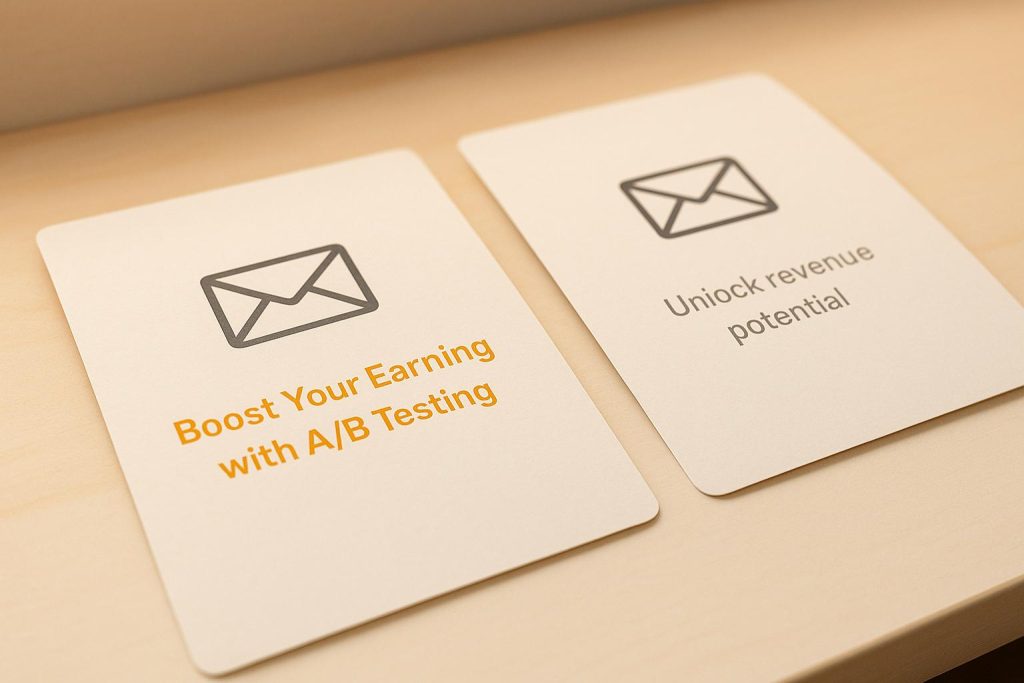
In email marketing, subject lines are critical – they decide whether your email gets opened or ignored. A/B testing is the simplest way to find out what works best. Here’s how it works:
- Test Two Versions: Create two subject line variations and send them to random segments of your audience.
- Measure Results: Track open rates, clicks, and conversions to see which subject line performs better.
- Refine Future Campaigns: Use the winning insights to improve your future emails.
Key elements to test include length, tone (formal vs. casual), personalization, urgency, and numbers. For example, "Limited time: 50% off everything" vs. "Save 50% on everything today." The goal is to find what resonates with your audience and drives engagement. Tools like MailMonitor can also help track deliverability and ensure your emails land in inboxes, not spam.
A/B testing isn’t complicated, but it’s powerful. Test one variable at a time, use a large enough sample (1,000+ recipients), and focus on statistically significant results. Over time, these small tweaks can lead to better open rates and more effective campaigns.
How A/B Testing Works for Subject Lines
What A/B Testing Is and Why It Matters
A/B testing, also known as split testing, is a method used to compare two versions of a campaign to determine which one performs better [1]. In email marketing, it’s a powerful way to figure out which subject line grabs more attention, boosts engagement, and ultimately drives higher conversions and ROI [1]. When testing subject lines, you create two variations of the same email and randomly divide your audience to see which version resonates more [1]. Let’s dive into how to set up an effective A/B test for your subject lines.
A/B Testing: How To Write Better Subject Lines
How to Set Up Subject Line A/B Testing
Setting up A/B tests for subject lines is a straightforward process when you follow a clear plan. Below, we’ll walk through the key steps to implement this strategy effectively.
Step 1: Choose Your Campaign and Testing Variable
Start by selecting a campaign with at least 1,000 subscribers. This ensures you have a large enough audience to produce meaningful results. Regular newsletters, promotional emails, or product announcements are great options for testing.
Next, focus on one specific variable to test. This could be personalization (e.g., using the recipient’s name), tone (casual vs. formal), or length (short vs. long subject lines). For instance, if you’re testing personalization, you might compare "Hi [Name], your exclusive offer inside" to "Your exclusive offer inside." Keep everything else in the email exactly the same to isolate the impact of your chosen variable.
Step 2: Write Subject Line Variations
Once you’ve identified your variable, create two distinct subject line versions. The difference should clearly reflect the variable you’re testing, without introducing any other changes.
For example, you could test urgency by comparing "Limited time: 50% off everything" with "Save 50% on everything today." The goal is to see if urgency language drives higher open rates.
Before crafting your variations, write down your hypothesis. For example: "I believe urgency language will increase open rates because our audience tends to respond well to time-sensitive offers." This helps focus your test and provides clarity when reviewing the results.
Step 3: Divide Your Audience
Split your email list into random, equal segments to ensure unbiased results. Most email platforms handle this automatically, but double-check that the segments represent your audience fairly.
For a simple A/B test, use a 50/50 split. Alternatively, you can try a 40/40/20 split: send two variations to 40% of your list each, then send the better-performing version to the remaining 20%. This method is ideal for larger campaigns where you want to maximize results.
Step 4: Run the Test and Monitor Performance
Send both email versions at the same time to eliminate timing bias. Even small differences in send times can influence open rates, so simultaneous delivery ensures a fair comparison.
Pay attention to deliverability metrics during the test. Subject lines can affect where your emails land – whether in the primary inbox, spam folder, or promotional tab. Tools like MailMonitor can help you track this, as inbox placement has a direct impact on open rates and the accuracy of your results.
Let the test run for 24–48 hours, or longer for B2B campaigns where recipients might check their emails less frequently.
Step 5: Analyze Results and Apply Insights
Evaluate the results by focusing on open rates, but also consider click-through rates and conversions. The best subject line isn’t just the one that gets the most opens – it’s the one that drives meaningful engagement.
Look for statistically significant differences before declaring a winner. A small difference in open rates (e.g., 2–3%) might not mean much, especially with smaller sample sizes. Most email platforms calculate statistical significance for you, but aim for at least 95% confidence in your results.
Document your findings for future reference. Note which version performed better, by how much, and any patterns you notice. For example, if personalized subject lines consistently outperform generic ones, that insight can shape your broader email strategy.
Use these results to refine your future campaigns. A/B testing is most effective when you continuously apply what you learn to keep improving your email performance.
What to Test in Subject Lines
Certain elements in subject lines can significantly influence open rates and engagement when approached with a systematic testing strategy.
Length: Short vs. Long Subject Lines
The length of your subject line can affect how it appears across devices and email platforms. Short subject lines – those under 30 characters – are ideal for mobile devices with limited screen space, often sparking curiosity that encourages recipients to open the email. On the other hand, longer subject lines, ranging from 50 to 70 characters, allow for more context and detail, making them effective for complex offers or when additional information is needed to drive decisions.
For example, B2B audiences may respond better to detailed subject lines that clearly outline the value of the email’s content. In contrast, consumer brands often see success with shorter, more attention-grabbing messages. Testing both styles with your audience can help determine what resonates most for different campaigns. Additionally, aligning the tone of your subject line with your brand and audience is just as critical.
Tone: Formal vs. Casual
The tone of your subject line sets the mood for the entire email. A formal tone can establish trust and professionalism, making it a good fit for industries like finance, professional services, or B2B communication. Meanwhile, a casual tone can feel more relatable and engaging, especially for lifestyle brands, e-commerce, or younger audiences. Examples include playful lines like "Oops, we messed up (but here’s 20% off)" or "Your weekend plans just got better."
Personalization and Dynamic Content
Incorporating personalization into your subject lines can make them more relevant and engaging. Dynamic content, such as referencing a recipient’s location, past purchases, browsing habits, or demographic details, can make your emails feel tailored. For instance, subject lines like "Based on your recent searches" or "Perfect for frequent travelers" leverage this data effectively.
However, personalization relies on accurate data. Mistakes in personalization can harm your credibility, so ensure your data is clean and up-to-date. Once you’ve personalized your subject line, adding urgency can further motivate immediate action.
Urgency and Time-Sensitive Language
Urgency taps into a psychological trigger that drives quick decisions. Using time-sensitive phrases like "24 hours left", "Sale ends tonight", or "Only a few left in stock" can encourage readers to act promptly.
That said, urgency must feel authentic. Overusing or exaggerating urgency can damage your sender reputation and lead to higher unsubscribe rates. Whether you’re emphasizing scarcity ("Only 50 spots left") or deadlines ("Offer ends at midnight"), test different approaches to find what resonates with your audience.
Numbers and List Formats
Numbers in subject lines can grab attention and set clear expectations, often leading to higher open rates. Formats like "5 ways to…" or "10 tips for…" promise readers organized and easy-to-skim content, which is especially appealing to busy subscribers.
Specific numbers also add a sense of credibility. For instance, a subject line offering "7 strategies" feels more concrete and trustworthy than one with vague or rounded figures. However, make sure your email content delivers on the promise made in the subject line to maintain trust. As with all tests, ensure these elements don’t negatively impact your email deliverability.
When experimenting with these subject line elements, remember that deliverability is just as important as the content itself. Even the most compelling subject line won’t perform if your emails end up in spam folders. Tools like MailMonitor can help you track and improve your email deliverability, ensuring your messages reach the primary inbox instead of spam or promotions tabs.
sbb-itb-eece389
How to Read and Use A/B Test Results
Once you’ve mastered subject line testing, the next step is making sense of your A/B test results. To keep your email campaigns thriving, it’s important to dig deeper than just open rates.
Open Rates, Click Rates, and Engagement Metrics
Open rates are often the go-to metric for evaluating subject lines, but they only tell part of the story. A higher open rate doesn’t always mean your campaign is performing better – especially if clicks or conversions don’t follow suit.
To get a fuller picture, analyze additional metrics like click-through rates, conversion rates, and even unsubscribe rates alongside open rates. For example, a subject line that’s more specific or transparent might generate fewer opens but attract a more engaged audience.
Device and email client preferences also play a role. Results might show that shorter subject lines resonate better with mobile users, while longer ones perform well on desktops. Understanding these nuances helps you tailor your approach to match your audience’s habits.
These details provide a foundation for assessing statistical significance.
Statistical Significance and Unclear Results
Not every A/B test will yield a clear winner, and that’s perfectly normal. In fact, about one-third of tests result in non-significant outcomes [3]. To confidently declare a winner, aim for a confidence level of 90-95% [2][3].
If your results don’t hit this threshold, consider extending the test. Online tools can help you calculate how much longer the test needs to run. You can also dive into segmented analysis – breaking down results by audience demographics or behavior might reveal trends that aren’t obvious in the overall data.
"Non-significant results aren’t failures." – The Statsig Team [3]
Sometimes inconclusive outcomes are simply due to a small sample size. If that’s the case, re-run the test with a larger audience to gather more reliable data.
Once you’ve achieved statistically significant results, the next step is applying those insights to improve your future campaigns.
Using Results for Future Campaigns
The real payoff of A/B testing lies in how you use the findings. Document the winning subject lines and identify what made them successful – whether it was personalization, urgency, or a specific tone that clicked with your audience.
Create a testing log to track trends over time. For instance, does your audience respond better to questions or statements? Do they prefer subject lines that highlight clear benefits or ones that spark curiosity? This evolving playbook will be an invaluable tool for shaping future campaigns.
Keep in mind that one size doesn’t fit all. A subject line that excels in a promotional email might fall flat in a newsletter. Consistent testing tailored to different types of campaigns is key to staying relevant.
Lastly, don’t overlook the connection between subject line performance and overall email deliverability. Tools like MailMonitor can help ensure your emails land in inboxes, keeping your engagement metrics accurate.
Best Practices for Subject Line A/B Testing
Follow these strategies to transform A/B testing insights into more impactful email campaigns.
Test One Variable at a Time
The cardinal rule of A/B testing is to change only one variable at a time. If you tweak multiple elements – like subject line length, tone, and personalization – you won’t know which change influenced the results. This muddies the waters instead of providing clarity.
Stick to testing one specific element per campaign. For example, if you’re curious about personalization, compare “Your exclusive offer inside” with “Exclusive offer inside.” Then, in a separate test, focus on urgency by comparing “Your exclusive offer inside” with “Your exclusive offer expires tonight.”
By isolating variables, you’ll gain a clearer picture of what resonates with your audience. Think of each test as a building block. Over time, you can confidently combine winning elements to craft subject lines that perform even better. Once you’ve nailed down your variables, make sure your tests are reaching a statistically meaningful audience.
Use Large Enough Sample Sizes
A/B testing is only as reliable as your sample size. To ensure your results are meaningful, aim for at least 1,000 recipients per test variation. Larger groups help filter out statistical noise, making it easier to identify real performance differences.
Your typical engagement rates play a role here. For instance, if your average open rate is 20%, you’ll need a bigger sample to detect small improvements compared to campaigns with a 40% open rate. Smaller groups make it harder to tell whether changes in performance are genuine or just random fluctuations.
By planning tests with adequate sample sizes, you’re laying the groundwork for strategic, measurable improvements. But even with the perfect sample, there’s one more thing to watch: where your emails actually land.
Monitor Deliverability and Inbox Placement
Even the catchiest subject line won’t work if your emails end up in spam folders. That’s why monitoring deliverability is a critical part of A/B testing.
For example, an urgent subject line like “Act now – limited time!” might grab attention but also trigger spam filters. Tools like MailMonitor can help you track how your test variations perform across different email providers and inbox placements. With seed testing capabilities, you can preview where your emails land before sending them to your full list.
Keep an eye on inbox placement rates along with traditional metrics like open rates. A subject line with a 25% open rate and 90% inbox placement often outperforms one with a 30% open rate but only 70% inbox placement.
Consistently tracking deliverability also reveals how your subject line choices impact your sender reputation over time. Even if a test shows short-term gains, poor deliverability could hurt your long-term campaign performance.
Conclusion
A/B testing transforms subject line optimization into a precise, data-driven approach that enhances email performance. By experimenting with elements like length, tone, personalization, and urgency, you uncover what truly connects with your audience.
The process is straightforward: choose a variable, create variations, split your audience, run the test, and analyze the results. Keep in mind that statistical significance is more important than minor percentage changes, and what succeeds with one group might not resonate with another. These insights help refine your overall email strategy.
Stick to best practices to get the most out of your tests. Focus on one variable at a time, ensure each variation reaches at least 1,000 recipients, and keep an eye on deliverability. Tools like MailMonitor can help confirm your emails are reaching inboxes.
Start simple – compare short and long subject lines or formal versus casual tones – and build on your findings over time. Even basic tests can reveal insights that improve open rates and overall campaign success.
Consistent testing isn’t just about short-term gains; it builds a deeper understanding of your audience. Over time, this knowledge leads to more effective and impactful email campaigns.
FAQs
How can I make sure my A/B test results for email subject lines are accurate and meaningful?
To get reliable results from your A/B tests for email subject lines, you’ll need a large enough sample size – ideally, at least 1,000 recipients per variation. This ensures your data is more dependable and less influenced by random chance.
When analyzing your results, aim for a p-value below 0.05. This means you can be 95% confident that the differences in open rates aren’t just random. Online A/B testing calculators can be a handy tool to verify if your results are meaningful. With these steps, you’ll be better equipped to make informed decisions and improve your email campaigns.
What mistakes should I avoid when A/B testing email subject lines?
When running A/B tests on email subject lines, it’s important to keep things simple. Testing too many variables at once can muddy the waters, making it tough to pinpoint what actually influenced the results. Focus on changing just one element per test – like tone or word choice – to get clear and actionable insights.
Another pitfall is working with a sample size that’s too small. Small samples can lead to unreliable data, leaving you with results that don’t truly reflect your audience’s behavior. To get meaningful insights, aim for a sample size that’s statistically significant. And before you even start testing, make sure you have a specific hypothesis and goal in mind. This helps you avoid vague results and keeps your testing process focused.
Lastly, don’t forget to design with mobile users in mind. Many people check their emails on their phones, so your subject lines need to grab attention on smaller screens. And while it might be tempting to use misleading subject lines to boost open rates, this can backfire. Misleading your audience may get quick wins, but it risks damaging trust and long-term engagement.
How does email deliverability impact A/B testing results, and how can I ensure accurate monitoring?
Email deliverability is a critical factor in A/B testing. After all, if your emails don’t make it to your recipients’ inboxes, your open rates and engagement metrics won’t give you an accurate picture of how your subject lines or content are performing. Poor deliverability can skew your results, making it much harder to fine-tune your campaigns.
To ensure your A/B testing results are reliable, keep a close eye on deliverability metrics like sender reputation, bounce rates, and inbox placement. Using tools that offer detailed insights into email performance can help you spot and fix deliverability problems. This way, your emails are more likely to land where they should – your audience’s inboxes – and your test data will be far more dependable.

